

Common Types of Sleep Disorders in Children
Contributed by: Dr Leo Deng Jin
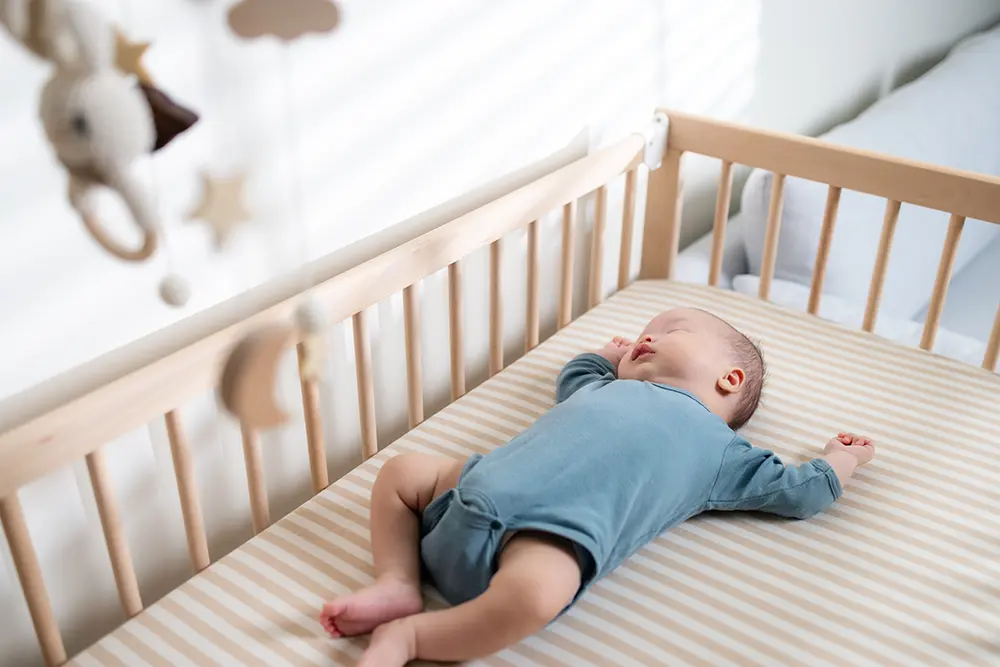
Sleep Onset Association Disorder
One of the most common sleep difficulties seen in young children is sleep onset association disorder.
This condition is characterised by frequent night awakenings, where the child requires specific conditions to fall back asleep.
Examples include needing:
- Rocking or feeding to fall asleep
- A particular object such as a blanket or toy
- A specific sleeping environment or parental presence
Because the child associates sleep with these conditions, they may wake repeatedly during the night and require the same cues in order to return to sleep.
Establishing consistent bedtime routines and encouraging independent sleep habits can help reduce night awakenings over time.
Limit-Setting Sleep Disorder
Another common sleep issue is limit-setting sleep disorder, which is usually seen in children older than two years of age.
Children with this pattern may:
- Stall or refuse to go to sleep at the appropriate bedtime
- Make repeated requests for attention after being put to bed
- Ask for drinks, stories, or reassurance multiple times
- Leave their bed frequently
These behaviours often occur when bedtime limits are inconsistent or when children learn that delaying tactics lead to more parental attention.
Consistent bedtime routines and clear sleep boundaries can help address this pattern.
Delayed Sleep Phase Syndrome
Delayed sleep phase syndrome is more commonly seen in older children and adolescents.
Children or teenagers with this condition experience:
- Difficulty falling asleep at night (sleep onset insomnia)
- A tendency to fall asleep much later than expected
- Difficulty waking up in the morning
- Daytime fatigue due to insufficient sleep
This pattern is often influenced by biological changes during adolescence, as well as lifestyle factors such as late-night screen use.
Adjusting sleep schedules gradually and maintaining consistent wake times may help improve sleep patterns.

Night Terrors
Night terrors are a type of sleep disturbance that usually occurs in the first third of the night, typically during deep slow-wave sleep.
During an episode, a child may:
- Cry or scream suddenly during sleep
- Sit upright in bed
- Appear frightened or distressed
- Be difficult to awaken or unresponsive
- Appear confused or disoriented
Although these episodes can be alarming for parents, children usually have no memory of the event the following morning.
Night terrors are different from nightmares and often resolve as the child grows older.
When Should Parents Seek Medical Advice?
Occasional sleep disturbances are common in children. However, parents may consider consulting a doctor if sleep problems:
- Occur frequently or worsen over time
- Significantly disrupt the child’s sleep or daytime functioning
- Lead to persistent bedtime struggles or night awakenings
- Are associated with unusual sleep behaviours
A paediatric assessment can help determine whether the sleep problem is related to behavioural sleep patterns, developmental factors, or other medical conditions.
Paediatric Assessment for Childhood Sleep Problems
At Kids Clinic @ Bukit Batok, Dr Leo Deng Jin provides evaluations for sleep difficulties, behavioural concerns, and developmental issues in children and adolescents.
In addition to assessing sleep patterns, Dr Leo provides acute paediatric care, chronic paediatric care, and management of common childhood illnesses, as well as developmental and nutritional assessments for growing children.
For families concerned about persistent sleep difficulties, a structured paediatric consultation can help identify contributing factors and provide guidance on improving healthy sleep habits.
Parents who are concerned about their child’s sleep patterns or overall wellbeing may consult Dr Leo Deng Jin at Kids Clinic @ Bukit Batok for further assessment and advice.
Frequently Asked Questions
Are sleep problems common in children?
Yes. Many children experience temporary sleep disturbances at different stages of development. Most improve with consistent sleep routines.
What causes frequent night awakenings in children?
Frequent night awakenings are often related to sleep associations, where a child depends on certain conditions such as rocking or parental presence to fall asleep.
Are night terrors dangerous?
Night terrors can appear frightening but are usually harmless and children typically do not remember the episode the next day.
When should I see a paediatrician for sleep problems?
If sleep disturbances are frequent, persistent, or affecting daytime functioning, a paediatric assessment may help identify the cause and guide management.
Sources:
https://www.singhealth.com.sg/symptoms-treatments/sleep-onset-association-type-bic
https://www.singhealth.com.sg/symptoms-treatments/limit-setting-behavioural-insomnia-childhood
https://www.singhealth.com.sg/symptoms-treatments/circadian-rhythm-coping-shift-work
https://www.singhealth.com.sg/symptoms-treatments/parasomnias-in-children

About Author
Dr Leo Deng Jin is a paediatrician in Singapore with more than 20 years of experience caring for children and families. He previously served at KK Women’s and Children’s Hospital (KKH), Singapore’s largest paediatric emergency department, where he managed acute paediatric emergencies.
Previously based at Thomson Paediatric Centre – Bukit Panjang (康盛儿科诊所) at Hillion Mall (Bukit Panjang), he was known for his compassionate approach and thorough care.
Dr Leo Deng Jin’s Place of Practice
Kids Clinic @ Bukit Batok
(Coming soon)
Le Quest Mall
4 Bukit Batok Street 41, #01-16
Singapore 657991
Tel: (65) 6011 1530
Tags:
- Parenting journey