

Why Does My Baby Have Pimples?
Contributed by: Dr Leo Deng Jin
What Is Neonatal Acne?
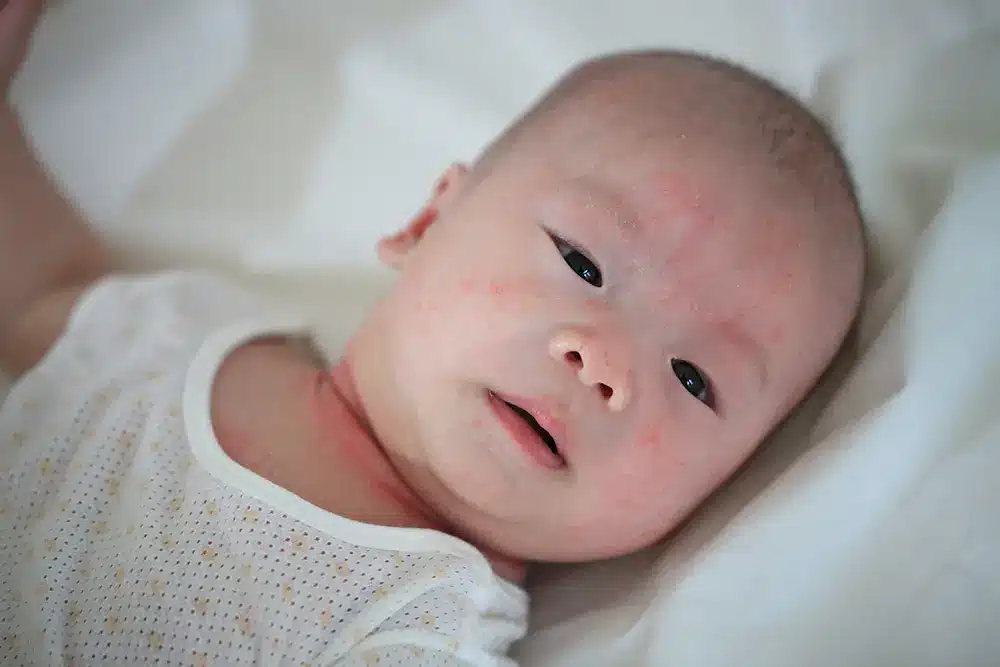
Neonatal acne, also known medically as neonatal cephalic pustulosis, is a common skin condition that may appear anytime from birth up to around 4 weeks of age.
It typically presents as:
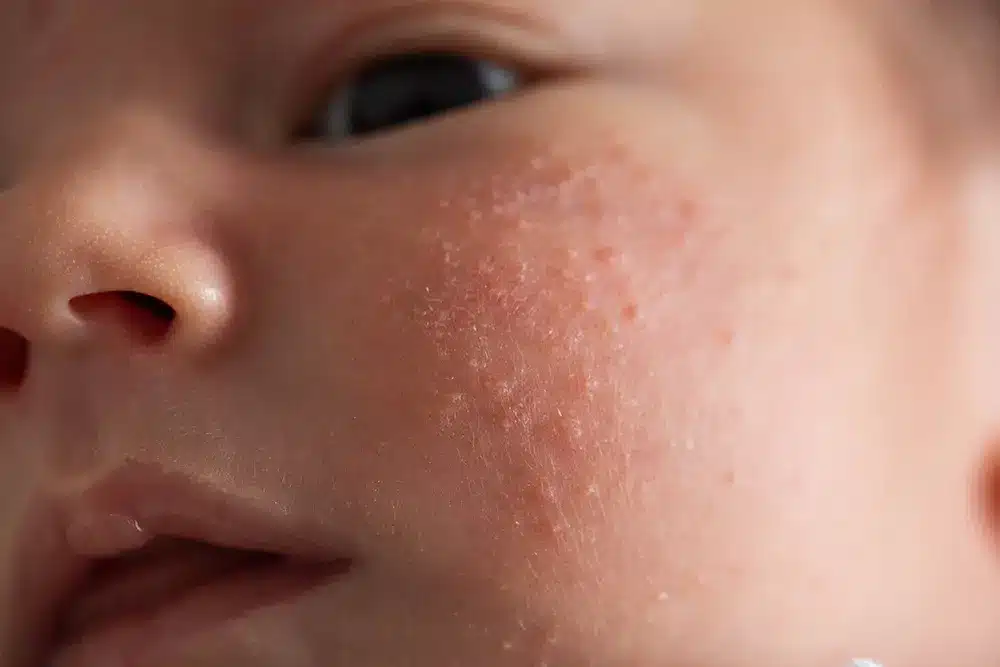
- Small red or white bumps on the cheeks, nose, or forehead
- Mild inflammation around the bumps
- Occasional pustules resembling small pimples
This condition is believed to be related to exposure to maternal hormones during pregnancy, particularly androgens transferred through the placenta. These hormones can stimulate the baby’s sebaceous (oil) glands, increasing the likelihood of acne-like breakouts.
Neonatal acne is also more common in boys than in girls.
The reassuring news for parents is that neonatal acne usually resolves on its own without treatment, often within a few weeks.
Other Newborn Skin Conditions That May Look Similar
Several common newborn skin conditions may resemble acne. These include:
Milia
Tiny white bumps caused by trapped keratin under the skin. Milia are very common in newborns and typically disappear naturally within a few weeks.
Erythema Toxicum Neonatorum (ETN)
A benign newborn rash that may appear as red blotches with small bumps. It commonly appears within the first few days of life and resolves without treatment.
Because these conditions can look similar, a doctor’s assessment can sometimes help confirm the diagnosis and reassure parents.
What Is Infantile Acne?
A different condition known as infantile acne can appear later in infancy.
Infantile acne usually develops between 1 month and 1 year of age and is also more commonly seen in boys.
Unlike neonatal acne, infantile acne may include:
- Comedones (whiteheads or blackheads)
- Inflamed pimples or pustules
- Occasional nodules in more severe cases
In some children, infantile acne may lead to skin scarring if untreated, which is why medical assessment is often recommended.
How Is Infantile Acne Treated?
Management depends on the severity of the condition.
Treatment options may include:
- Topical treatments, such as benzoyl peroxide
- Topical medications prescribed by a doctor
- Oral antibiotics in selected cases where inflammation is more significant
A paediatric evaluation helps determine whether treatment is necessary and ensures that the condition is correctly diagnosed.
When Should Parents Seek Medical Advice?
Most newborn acne resolves naturally and does not require treatment. However, parents may consider consulting a doctor if:
- Pimples appear after the first month of life
- Whiteheads or blackheads are present
- The rash becomes more inflamed or widespread
- Skin lesions persist for several months
- There are concerns about scarring
A clinical assessment can help distinguish between neonatal acne, infantile acne, and other newborn skin conditions.
Paediatric Assessment for Baby Skin Conditions
At Kids Clinic @ Bukit Batok, Dr Leo Deng Jin provides evaluations for newborn skin concerns, infant acne, and other common childhood skin conditions.
In addition to managing common childhood illnesses, Dr Leo provides acute paediatric care, chronic paediatric care, and developmental and nutritional assessments for babies, children, and adolescents.
For infants with persistent acne-like rashes or skin concerns, a paediatric consultation can help determine whether the condition is part of normal newborn development or requires treatment.
Parents who are concerned about their baby’s skin or overall health may consult Dr Leo Deng Jin at Kids Clinic @ Bukit Batok for further assessment and guidance.
Frequently Asked Questions
Is baby acne normal?
Yes. Neonatal acne is a common condition that affects many newborns and usually resolves naturally without treatment.
Can I use acne products on my baby?
Most baby acne does not require treatment. Parents should avoid using over-the-counter acne products unless advised by a doctor.
How long does newborn acne last?
Neonatal acne typically clears within a few weeks to a few months as hormone levels stabilise.
Does infant acne leave scars?
In some cases, infantile acne may cause scarring if it becomes inflamed. Early medical assessment helps guide appropriate management.
Sources:
https://www.webmd.com/parenting/baby/what-to-know-baby-acne-proper-hygiene
https://www.webmd.com/skin-problems-and-treatments/erythema-toxicum-neonatorum

About Author
Dr Leo Deng Jin is a paediatrician in Singapore with more than 20 years of experience caring for children and families. He previously served at KK Women’s and Children’s Hospital (KKH), Singapore’s largest paediatric emergency department, where he managed acute paediatric emergencies.
Previously based at Thomson Paediatric Centre – Bukit Panjang (康盛儿科诊所) at Hillion Mall (Bukit Panjang), he was known for his compassionate approach and thorough care.
Dr Leo Deng Jin’s Place of Practice
Le Quest Mall
4 Bukit Batok Street 41, #01-16
Singapore 657991
Tel: (65) 6011 1530
Tags:
- Parenting journey